

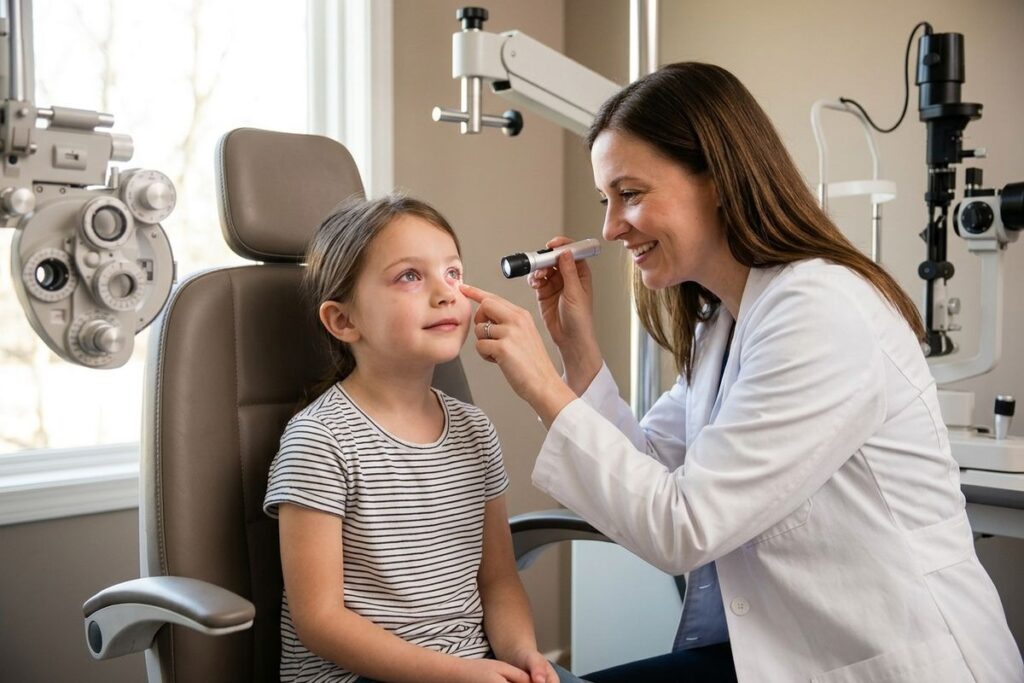
Kids explore the world hands-on, which often leads them to pick up germs or rub that world into their faces. Because of this, waking up to find your child with pink, watery eyes is a familiar experience for many parents. Red eyes are common in childhood, and most causes are mild.
Red eyes in children can come from allergies, irritation, tiredness, screen time, or infections like pink eye and styes. Most cases ease within 1 or 2 days, but some situations require a closer look from an optometrist to help ensure everything remains healthy.
Common Environmental Reasons Behind Red Eyes
Many everyday elements easily upset the sensitive tissues on the surface of the eye.
Pollen, dust mites, and animal hair frequently cause itchy, watery, and inflamed reactions. You might notice your kid sneezing and rubbing their face, along with ocular symptoms. Wash their face and hands immediately after playing outside or snuggling the family dog. Run an air purifier in their bedroom to clear out residual allergens floating in the air.
A swim in a chlorinated pool or a room with smoke can do the same. Keep a pair of properly fitted goggles in their swim bag and encourage them to wear them underwater. Limit outdoor time during smoke advisories.
Digital Eye Strain and Eye Fatigue
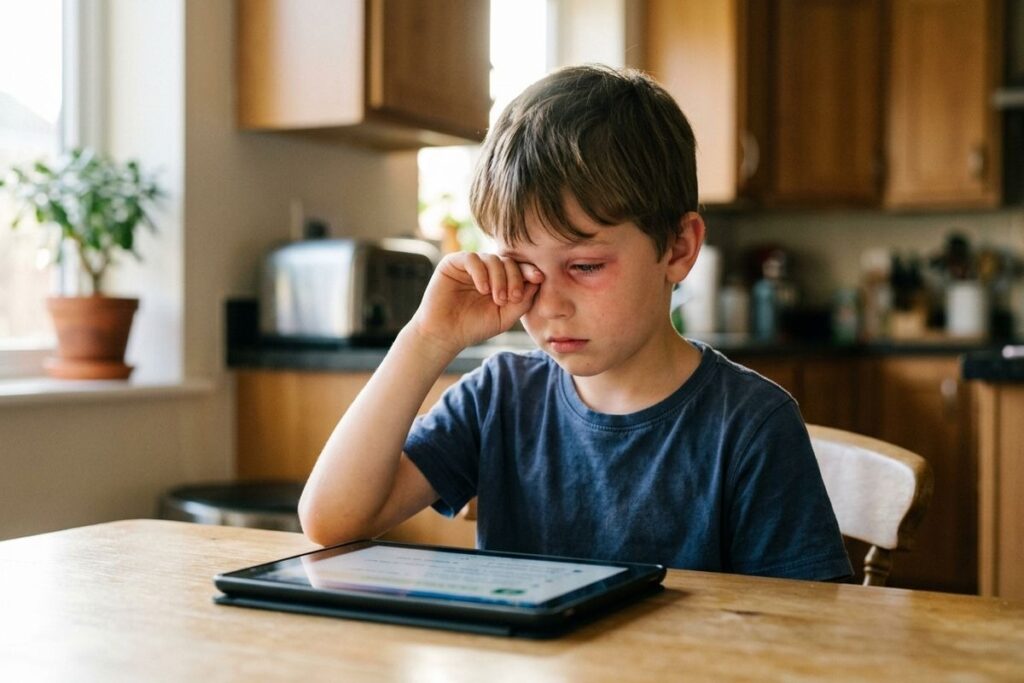
Sometimes the reason is simpler. Kids stare intently at tablets, phones, and computers for school projects and evening entertainment. This intense focus lowers their blink rate significantly, causing tears to evaporate more quickly and leaving their eyes red. Set clear boundaries on device usage and encourage frequent breaks away from screens.
A busy day or a skipped nap leaves everyone feeling tired. Lack of sleep makes the blood vessels in the eyes look pink and stand out. Set up a regular bedtime routine to help their bodies rest fully at night. A well-rested child is far less likely to deal with chronic redness or general grumpiness.
Infections That Lead To Redness
Some redness comes from an infection rather than an irritant. These spread fast in classrooms, so spotting the signs early helps you act quickly.
Pink Eye Basics
Pink eye moves through schools fast because kids share toys, desks, and close spaces. You might notice a sticky, yellow, or green discharge that crusts over while they sleep. It often starts on one side and quickly moves to the other within hours. Wash hands diligently and use separate towels at home to slow the spread among family members.
Styes And Eyelid Bumps
A stye looks like a small, tender lump near the lash line. The surrounding eyelid can swell up and feel quite sore to the touch. These occur when an oil gland gets blocked and infected with bacteria. Most styes settle with gentle warmth and time. If the swelling worsens or the eye remains red, an exam can help rule out other concerns.
Signs Your Child Needs An Eye Exam
While minor irritations clear up quickly, you should watch for signs of a more serious issue. Bring your child in for a professional eye exam if you notice any of the following symptoms:
- Frequent rubbing or squinting at near and far objects
- Complaints of sharp pain, severe light sensitivity, or blurry vision
- Inflammation and coloured discharge that linger past a couple of days
Trust what you see. A child who keeps tilting their head or sitting close to the screen may be telling you something their words can’t.
How Children’s Eye Care Supports Healthy Vision
Children’s eye care does more than treat redness. It builds a record of how your child’s vision grows year to year, so small changes get caught early.
We know a clinical environment can feel intimidating for little ones who don’t know what to expect. Optometrists keep the entire process fun and engaging by using shapes or pictures instead of standard letter charts. We check both visual acuity and the internal health of the delicate structures. Your child gets to relax, and you can ask questions along the way.
Nearsightedness, or myopia, often starts in the school years and can worsen as kids grow. Our team tracks these changes at each visit. When myopia develops, options like special contact lenses or eye drops can help slow its progression. Earlier support means more time to manage it.
Simple Home Habits To Protect Their Vision
Small habits at home can ease red, tired eyes and lower the chance of them returning. Keep these tips in mind:
- Place a cool, damp cloth over closed eyes for a few minutes of comfort.
- Limit screen time and add outdoor breaks during the day.
- Wash hands often and gently remind kids not to rub their eyes.
Outdoor time matters more than many parents expect. Hours spent playing outside give eyes a break from close work and support healthy growth.
Let’s Support Your Child’s Vision Together
Kids rely heavily on their vision to learn, play, and navigate the vast world around them. Don’t let lingering redness hold them back from doing their absolute best.
At Discover Eyecare, your child is treated like family. If red eyes keep coming back or you want a routine check, book an exam and give your child’s vision the care it deserves!