

Key Takeaways
- Scratches on glasses lenses are permanent physical damage, and no home remedy can remove them.
- DIY fixes like toothpaste, nail polish, and scratch-removal kits can make lenses worse.
- You should clean your glasses only with a microfibre cloth and mild soap.
- Deep scratches in your line of sight can affect your vision and even cause discomfort.
- New lenses can often be fitted into your existing frames.
- Anti-scratch coatings, ordered at the time your lenses are made, can help protect them going forward.
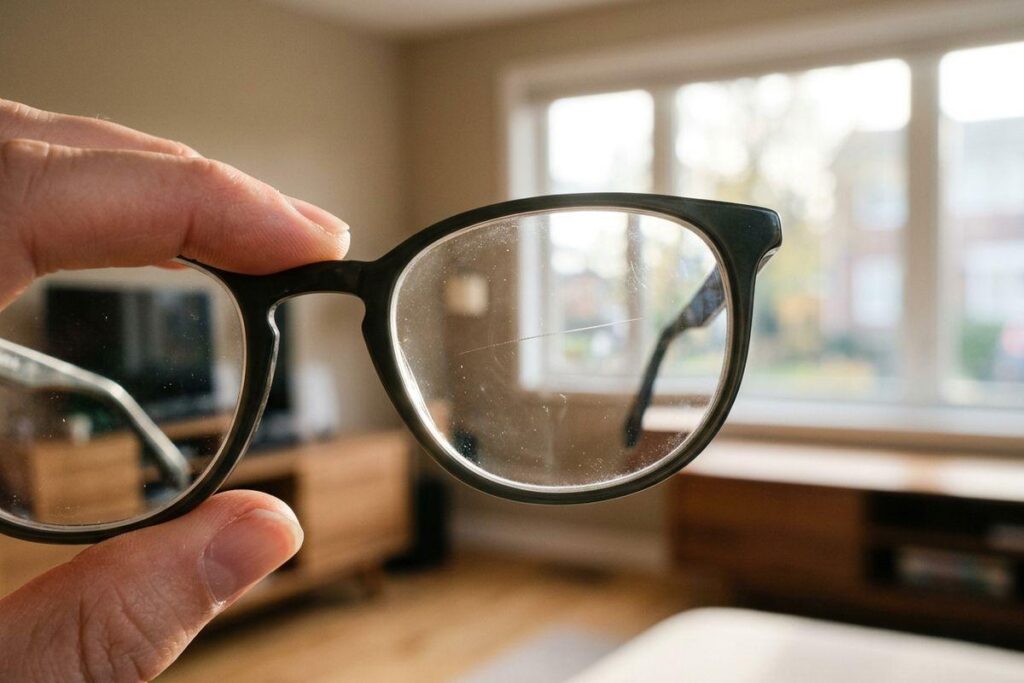
You pick up your glasses, hold them to the light, and there it is: A scratch running right across the lens. At Discover Eyecare, we know this is a frustrating moment, and most people’s first instinct is to reach for something in the bathroom cabinet and try to buff it out. Here’s why that’s not a good idea.
Scratches on glasses lenses are permanent, and no home remedy or over-the-counter product can truly remove them. The damage is physical, not just surface-level residue you can wipe away. What you can do is protect the lens from further damage, know when it’s time to replace it, and make choices that help your next pair last longer.
Why Scratches on Lenses Are Permanent
When a lens gets scratched, the surface of the material is physically altered. That change doesn’t reverse with polishing or rubbing.
Minor scratches at the edge of a lens might not bother you much day to day. But a deeper scratch, or one that sits right where you look through the lens, can blur what you see and may contribute to eye strain and headaches over time. If you notice your vision feels slightly off or your eyes feel tired more than usual, an eye exam can be a good first step to determining if a scratched lens could be part of the reason.
Why Home Remedies Can Do More Harm Than Good
It’s worth going through the most common DIY fixes, because the results are usually worse than the original scratch.
Toothpaste and Baking Soda
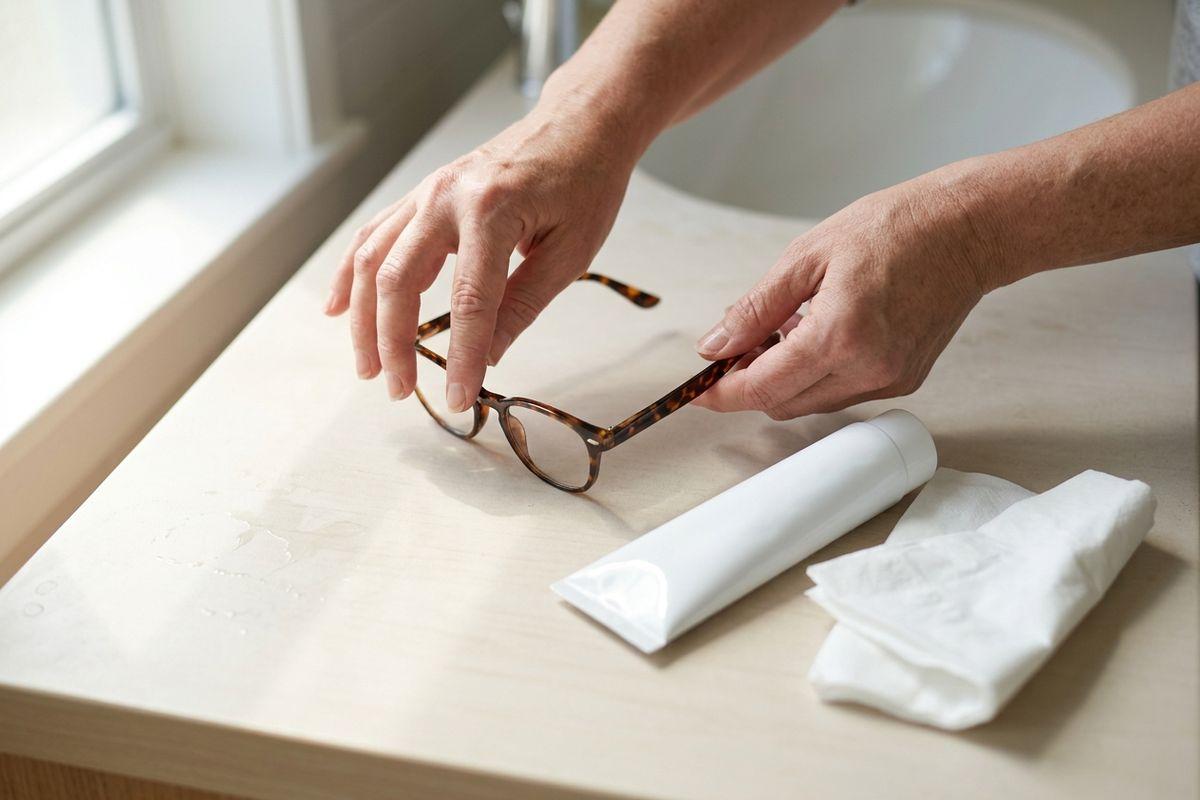
Toothpaste and baking soda are often recommended online to buff out scratches, but both are abrasive, which is exactly why people think they’ll work. In practice, that same abrasiveness strips away the protective coatings on your lenses. You can’t reapply anti-reflective and UV coatings once they’re removed. Repeated rubbing can also warp the lens surface or turn it cloudy, leaving you with damage that’s harder to see through than the original scratch.
Other Popular DIY Fixes
A few other remedies circulate online, and none of them hold up. Here’s what they actually do:
- Nail polish fills the scratch temporarily but leaves a hazy residue that distorts your vision.
- Vaseline and baby oil coat the surface without addressing the scratch at all.
- Scratch-removal kits sold online can mask very minor surface scuffs but do nothing for real scratches.
What You Can Do Right Now to Limit Further Damage
You can’t undo the scratch, but you can stop it from getting worse. Follow these steps to clean and handle your lenses safely:
- Rinse the lens under lukewarm water with a small drop of mild dish soap, then let it air-dry or gently pat with a clean lint-free cloth.
- Wipe your lenses only with a microfibre cloth, as it’s soft enough not to add new scratches.
- Skip clothing, tissues, and paper towels entirely, as all of them are rough enough to cause more damage.
When It’s Time to Replace Your Lenses
Signs the Scratch Is Affecting Your Vision
Not every scratch demands immediate action, but some do. Pay attention to these signs:
- The scratch sits directly in your line of sight, not off to the side.
- You’re getting frequent headaches or eye discomfort while wearing your glasses.
If either of those applies, it’s worth looking into replacement sooner rather than later. Wearing scratched lenses can affect your vision and put unnecessary strain on your eyes.
Replacement Lenses vs. New Frames
The good news is that you often don’t need to replace your entire pair of glasses. In many cases, you can fit new lenses into your existing frames. An optometrist can review your current prescription and the condition of your frames and help you decide which option makes sense for your situation.
How to Keep Your Lenses Scratch-Free Going Forward
Storage and Handling Habits
A hard-sided case is one of the simplest ways to protect your glasses. Tossing them into a bag without a case, even for a minute, is one of the most common ways lenses get scratched. Keeping your glasses away from heat and direct sun also matters, since high temperatures can affect lens coatings over time.
Lens Coatings Worth Asking About
Anti-scratch coating is applied when your lenses are made. If your current lenses didn’t come with one, ask about it when you order your next pair. It’s a practical choice for kids, people with active lifestyles, or anyone who’s lost a pair of glasses to scratches before. It’s also worth understanding what you’re actually paying for when it comes to lens quality and coatings, since the difference can be meaningful over the life of a pair.
Find Your Next Pair of Glasses
At Discover Eyecare, our experienced optical team can walk you through lens options that fit your prescription, your daily routine, and your budget. Whether you’re in Abbotsford or Chilliwack, reach out to the team to book an appointment and find out whether a lens replacement or a new pair makes the most sense for you.