
Key Takeaways
- Sunlight produces far more blue light than any screen your child uses.
- Blue light glasses have limited research support for eye strain relief in children.
- There is no proven link between blue light from screens and lasting eye damage.
- Blue light glasses do not slow or prevent myopia (nearsightedness) in kids.
- Simple habits like the 20-20-20 rule and outdoor time can reduce screen-related discomfort.
- A thorough children’s eye exam catches issues that no lens add-on can address.
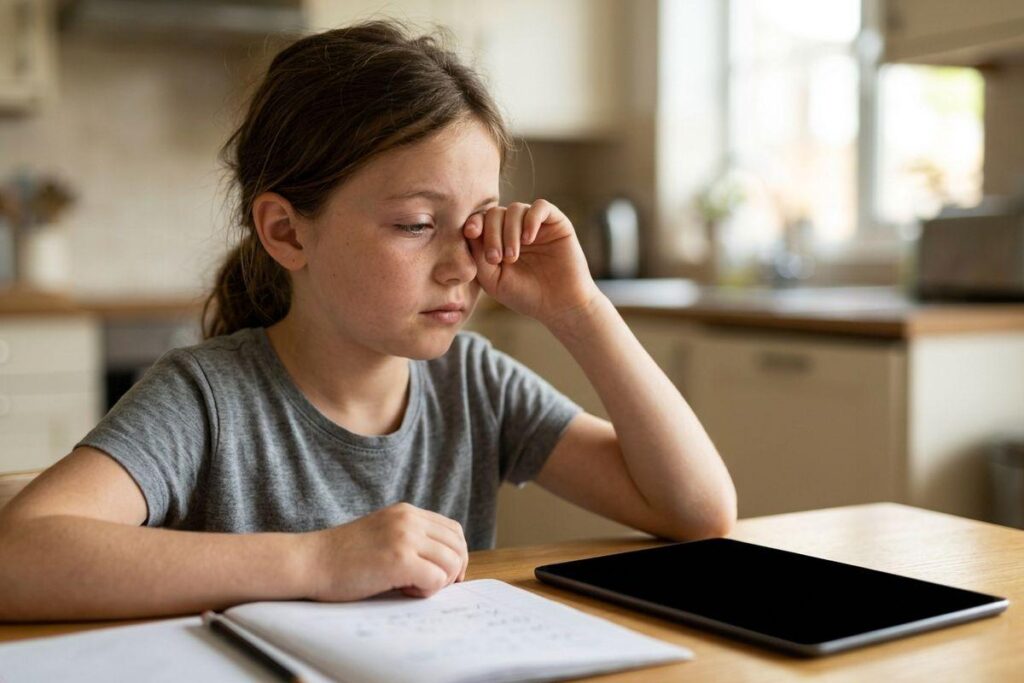
Your child squints at the tablet, rubs their eyes after homework, and you start wondering if blue light glasses might help. It’s a reasonable thought. These glasses are everywhere now, marketed to parents who want to protect their kids’ eyes. But before you add a pair to your cart, it’s worth knowing what the research actually says.
Blue light glasses may offer some children modest comfort, but they are not a proven solution for eye strain, and they have no effect on myopia or long-term eye health.
What Is Blue Light?
Blue light sits at the high-energy, short-wavelength end of the visible light spectrum. It’s the kind of light your eye can see, but it carries more energy than, say, red or yellow light. That detail matters when you’re deciding how much to worry about it.
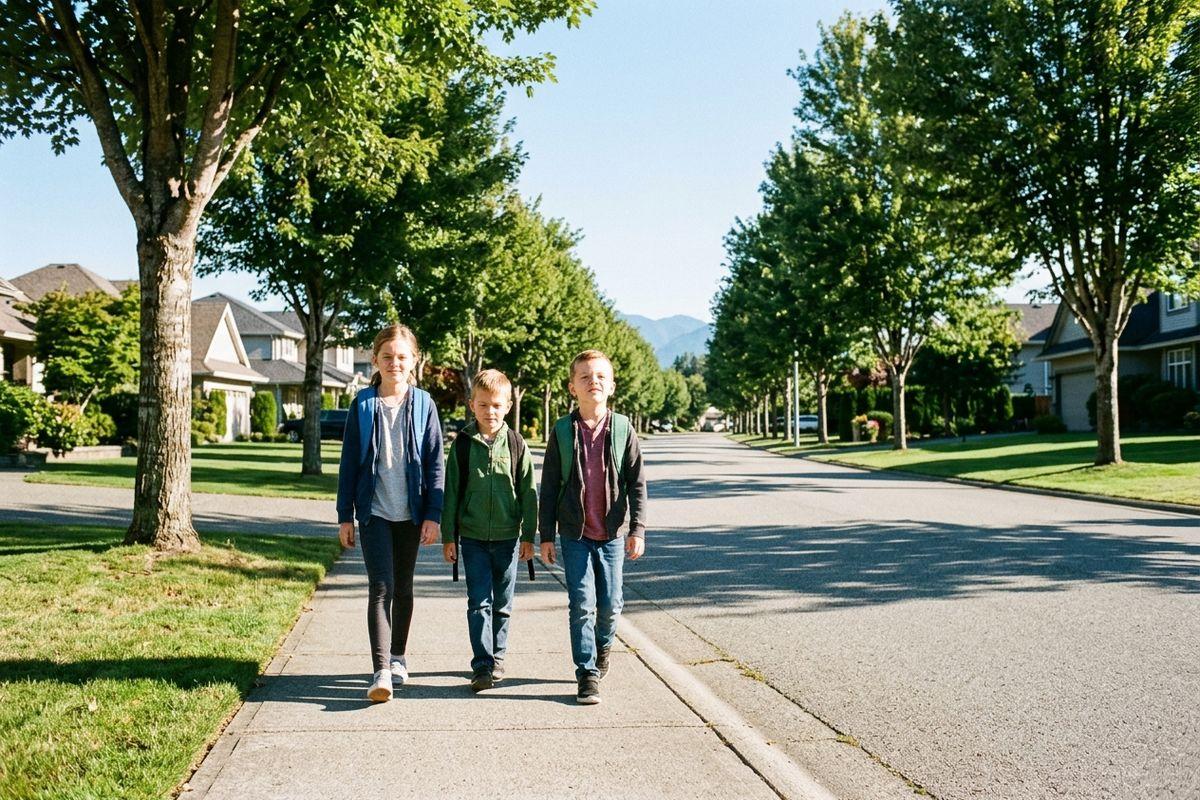
Here’s something most parents find surprising: sunlight is the largest source of blue light by a wide margin. Screens, LED lights, and fluorescent bulbs all emit blue light too, but the amount coming off a tablet or phone is small compared to a single afternoon outside. Your child’s eyes encounter far more blue light on the walk to school than during an hour of screen time.
What Blue Light Glasses Can and Cannot Do
Where the Evidence Is Mixed
Some children do report falling asleep more easily when they skip screens before bed, and blue light glasses may play a small role in that for some kids. Blue light in the evening can interfere with the body’s natural wind-down signals, so reducing it may help certain children settle at night.
Eye strain relief is a different story. The research here is genuinely mixed, and results vary from child to child. Some kids say they feel better wearing them; others notice no difference. That inconsistency makes it hard to call blue light glasses a reliable fix for tired or uncomfortable eyes.
What They Don’t Do
Two claims about blue light glasses are worth addressing directly. First, there is no proven link between blue light from screens and lasting damage to your child’s eyes. Second, blue light glasses do nothing to slow or prevent myopia, which is the gradual progression of nearsightedness. If myopia is a concern in your household, a conversation with an optometrist about myopia control options is a far more grounded starting point.
Signs Your Child May Have Digital Eye Strain
Digital eye strain is real, even if blue light isn’t the only factor behind it. It tends to show up in recognizable ways after sustained screen use. Watch for any of the following:
- Frequent headaches or eye tiredness after screen time.
- Dry or watery eyes, or vision that seems blurry or shifts in and out of focus.
- Slouching, fatigue, or difficulty staying focused on close tasks.
If these signs appear regularly or seem to be getting worse, book a children’s eye exam rather than reaching for a pair of blue light glasses.
Practical Ways to Reduce Screen-Related Eye Discomfort
The 20-20-20 Rule
The 20-20-20 rule is one of the most practical habits your child can build. For every 20 minutes of screen time, look at something about 20 feet away for 20 seconds. It gives the eyes a short break from the sustained focus that leads to fatigue. No glasses needed, just a small pause.
Other Helpful Habits
A few other adjustments can make a real difference in how your child feels after screen use. Try these alongside the 20-20-20 rule:
- Limit screens at least 1 to 2 hours before bed to support better sleep.
- Build in daily outdoor time, which supports healthy eye development (but don’t forget your sunglasses).
- Switch devices to dark mode or use a screen filter to reduce glare and brightness.
When to Talk to an Eye Doctor About Your Child’s Vision
A pair of glasses with a blue light filter won’t tell you whether your child’s prescription has changed, whether their eyes are working together properly, or whether myopia is progressing. A thorough children’s eye exam can catch all of those things, and catching them early tends to make a meaningful difference.
If nearsightedness is progressing, there are myopia control options an optometrist can walk you through. These are approaches that may help slow the rate of change, which is worth knowing about before the prescription keeps climbing.
Come See Us
At Discover Eyecare, our team takes the time to look at the full picture of your child’s vision, not just whether they can read the chart. If your child is showing signs of digital eye strain, or if it’s simply been a while since their last exam, the Abbotsford and Chilliwack clinics are ready to help. Book a children’s eye exam today and get answers you can actually rely on.