


An eye exam does more than update your glasses prescription. Your optometrist gets a direct look at the blood vessels at the back of your eye, and those vessels respond to what’s happening everywhere else in your body.
Diabetes can be detected during an eye exam, often before you notice anything different about your vision, because high blood sugar leaves visible marks on the retina. Those marks show up long before most people think to ask their family doctor about their blood sugar.
How Your Eyes Reveal Signs of Diabetes
The retina is the only place in your body where a clinician can see blood vessels directly, without a single incision. That makes it useful territory.
When blood sugar runs high over months or years, the tiny vessels feeding the retina start to weaken. They swell, leak fluid, or close off entirely. Sometimes they sprout fragile new branches that bleed.
Your optometrist can see all of that during a routine exam. Studies show that eye-related signs are already present in a meaningful portion of patients by the time diabetes is diagnosed, which means the exam sometimes comes first.
What Happens During a Diabetic Eye Exam
The appointment follows a straightforward path so your optometrist can see the back of your eye clearly:
- You’ll go through the usual vision and eye health checks that come with a comprehensive exam.
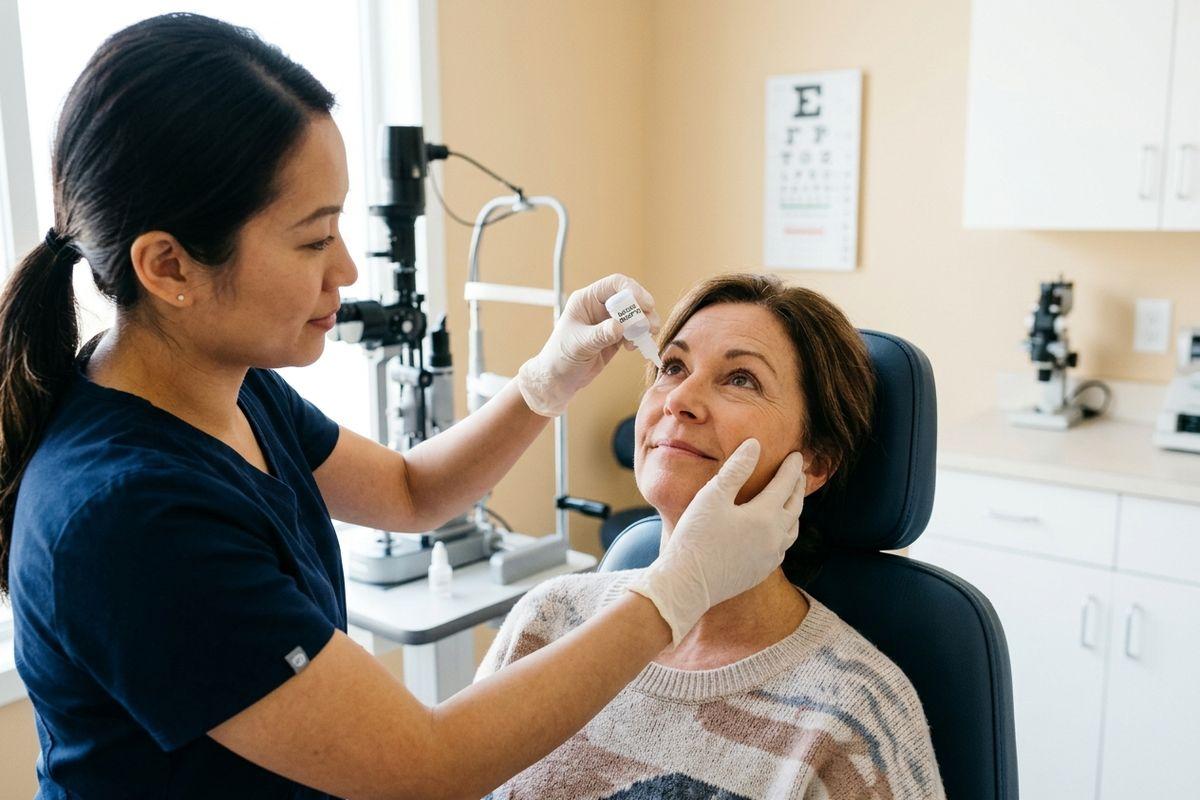
- Drops go in to widen your pupils, which takes about 20 minutes to take effect.
- Retinal imaging captures detailed photos of the vessels and tissue at the back of each eye.
- Your optometrist walks you through the images and explains what’s there.
Bring sunglasses. The drops leave you light-sensitive and blurry up close for a few hours afterward, so arrange a ride if reading a phone screen sounds unpleasant.
What Your Optometrist Looks For
With your pupils widened, a few specific findings stand out on the retina:
- Swelling or leaking in the smallest blood vessels
- Small spots of bleeding scattered across the tissue
- Yellowish deposits where fluid has seeped out and dried
- New, fragile vessels growing where they shouldn’t
- Changes in the area surrounding the optic nerve
Each finding adds to the picture of how your blood sugar may be affecting your sight, and that picture shapes what comes next.
Eye Symptoms Linked to Diabetes
Some changes turn up in ordinary moments, while you’re reading a menu or driving home at dusk. Keep an eye out for these:
- Blurry vision, or sight that seems clearer on some days than others
- Floaters or dark spots drifting across your field of view
- Trouble seeing clearly in low light
- Flashes of light at the edge of your vision
None of these points to diabetes on its own. Book an exam and you’ll get an actual answer rather than a guess.
Why Regular Diabetic Eye Exams Matter
Early changes are small and easy to miss without imaging to compare against. Regular visits give your optometrist a baseline, so subtle differences from one year to the next become obvious:
- Spot retinal changes sooner, while they’re still small
- Track shifts from one visit to the next
- Support the health goals you set with your family doctor
Regular imaging also gives your family doctor something concrete to work with when you’re adjusting medication or setting new targets.
Who Should Book an Exam
A yearly diabetic eye exam makes sense for some people more than others. Consider booking if any of this sounds like you:
- You’re managing type 1 or type 2 diabetes
- Diabetes runs in your family
- You’ve been told your blood sugar sits in the prediabetes range
- You’re over 60 and haven’t had a full exam in a couple of years
Your optometrist may suggest checking in more often than once a year if something turns up.
Care That Covers More Than One Appointment
Diabetic eye exams sit alongside everything else your family might need. That includes children’s eye exams, contact lens fittings, dry eye therapy, and myopia control for kids whose prescriptions keep changing.
Spending long hours at a screen? Digital eye strain is worth raising too. There’s also laser eye surgery co-management if you’re considering that route.
Give Your Eyes the Last Word
Your retina notices changes before you do. An hour in the exam chair turns that into information you can use.
At Discover Eyecare, you aren’t just another visitor, you’re part of the family. Book your diabetic eye exam and take a clear step toward healthier vision.