

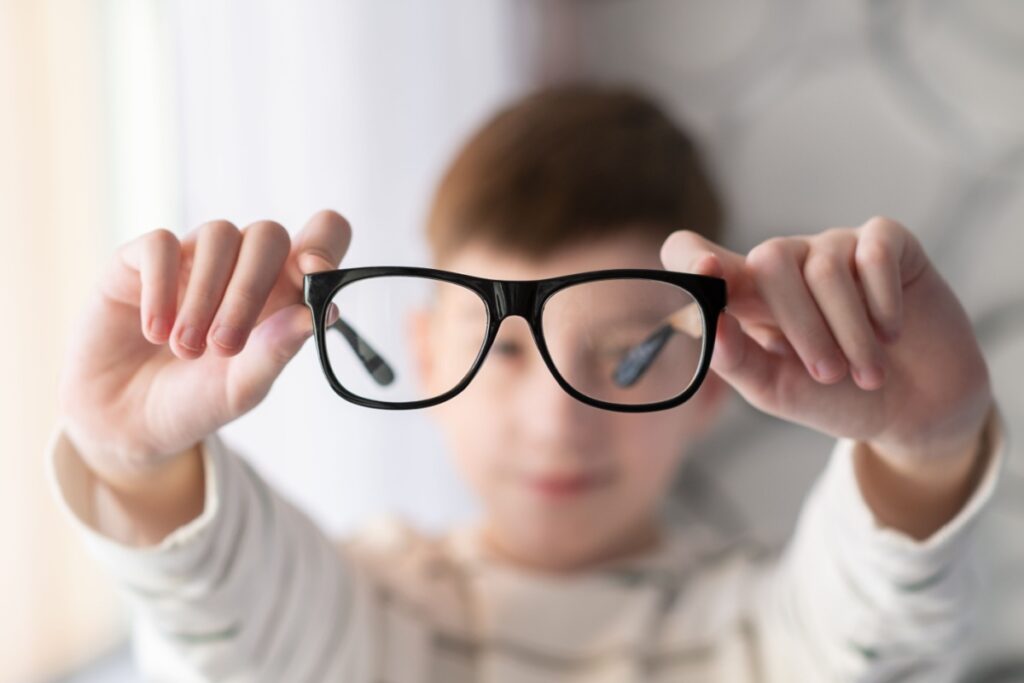
Maybe you notice that your child often squints at the television, or maybe you find that they often complain about not being able to see the board at school clearly. You take them in for an eye exam, and you learn that they have myopia, and now you’re wondering what might make the condition worse over time.
Myopia worsens due to a combination of genetic factors, lifestyle habits like excessive screen time and limited outdoor activity, environmental triggers, and natural age-related eye growth patterns during childhood and adolescence.
At Discover Eyecare, we see families learning to deal with myopia every day. That’s why our team offers myopia control treatments that can help protect your child’s future vision.
Genetic Factors That Influence Myopia Progression
Parental Myopia & Risk Levels
Your family history plays a significant role in determining whether your child will develop myopia and how quickly the condition might progress. If both parents are nearsighted, a child’s risk of developing the condition jumps to 60%, compared to 20% for children whose parents don’t have myopia.
Eye Shape & Growth Patterns
Genetics determine how your child’s eyeballs grow during development. Some inherited growth patterns can lead to faster myopia progression during childhood growth spurts.
Lifestyle Habits That Speed Up Myopia Development
A child’s daily routines and activities directly impact how quickly myopia progresses. Modern lifestyles often create the perfect conditions for worsening nearsightedness, especially in children and teenagers. Prolonged near work—whether from books, screens, or other close-up tasks—is one of the most significant environmental risk factors for myopia progression.
Screen Time & Digital Device Use
Extended use of phones, tablets, and computers contributes to myopia progression through sustained close-range focusing:
- Constant near work forces your child’s focusing muscles to accommodate at close distances for hours at a time
- Reduced viewing distances (often closer than books) create additional accommodation demand
- Lack of distance viewing breaks prevents the eyes from relaxing and refocusing
While screens themselves aren’t uniquely harmful compared to books, children today often spend significantly more total hours on near work than previous generations.
Educational Pressures
Academic demands increase the amount of near work children perform daily. Heavy homework loads, test preparation, and computer-based learning all contribute to extended periods of close-up visual tasks that can worsen myopia. Research on myopia trends shows these educational factors play an increasingly important role in vision development.
Limited Outdoor Activity
Children who spend time playing outdoors show reduced rates of myopia progression. This is because natural sunlight triggers dopamine release in your retina, which helps regulate healthy eye growth.
Age-Related Changes in Myopia Development
Your age affects how quickly myopia progresses. Children and teenagers experience the most rapid changes, while adult progression typically slows significantly.
Childhood Growth Spurts
Ages 6-14 represent the highest risk period for myopia development. During these years, your child’s eyes grow rapidly alongside their overall physical development. Faster eye growth often leads to more significant myopia progression. Children’s eye exams during this period can help track these changes.

Teenage Years & Hormonal Changes
Puberty brings hormonal changes that can accelerate eye growth. Combined with increased academic demands and digital device use, the teenage years often show the fastest myopia progression rates.
Adult Myopia Progression
Most adults see their myopia stabilize by their early twenties. However, some people continue experiencing progression due to occupational demands, health conditions like diabetes, or prolonged near work requirements.
Early Control Strategies to Slow Myopia Progression
Proven treatments can help slow myopia progression in children. Early intervention provides the most effective results for long-term vision health. At Discovery Eyecare, we provide a number of effective options for myopia control:
Contact Lens Options
MiSight daily disposable contact lenses can slow myopia progression by up to 59% in children, while also correcting your child’s vision. The lenses work by reducing contrast in order to slow the rate at which a child’s eye grows longer time.
Myopia Control Eyeglasses
MiyoSmart lenses feature DIMS technology that can reduce myopia progression by an average of 60%. These glasses provide clear central vision while creating specific focus zones that help control eye growth. MiyoSmart lens technology offers a comfortable option for children who prefer glasses over contact lenses.
Why You Should Schedule Regular Exams
Comprehensive eye exams provide the foundation for effective myopia management and help catch myopia progression early, when treatment options work most effectively.
Children with myopia should have comprehensive eye exams every year at minimum, though your optometrist may recommend more frequent exams depending on your child’s rate of myopia progression.
Measurement Techniques
Modern optometric technology can track subtle changes in your prescription and eye shape. This information helps us determine if current treatments are working effectively or if adjustments are needed.
Family History Assessment
As your optometrist in Abbotsford or Chilliwack, we can review your family’s vision history during your regular eye exams. This information helps us predict myopia risk and guides preventive treatment decisions.
If you’re concerned about myopia progression in yourself or your child, our team at Discover Eyecare offers comprehensive eye exams and myopia control treatments. Schedule an appointment to discuss how you can protect your family’s vision for years to come.