

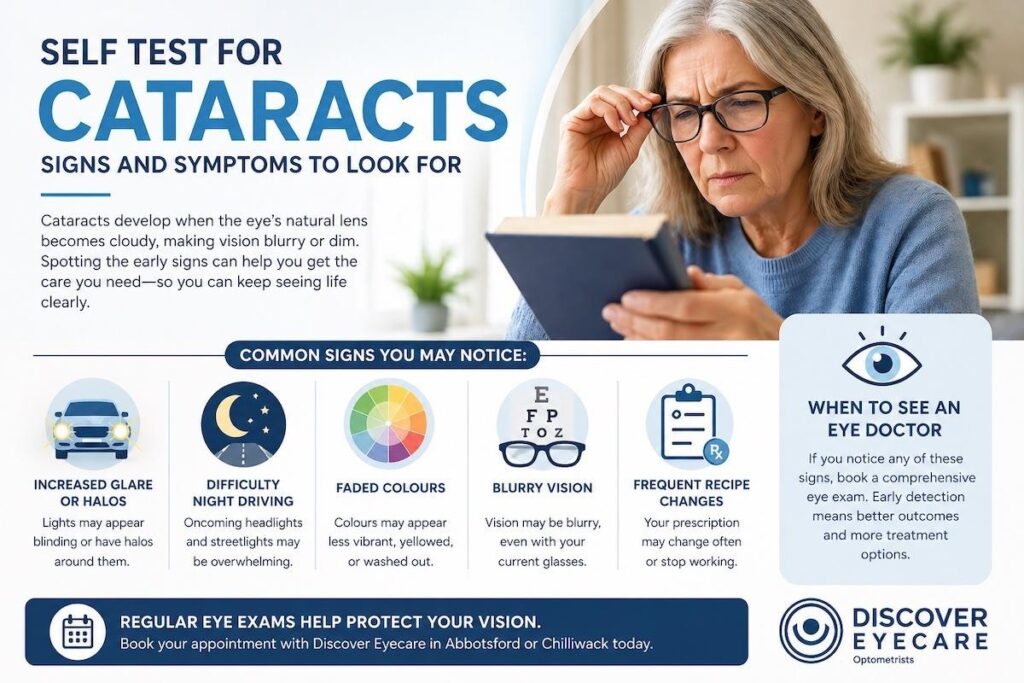
We rely on our eyes for almost everything we do, so it’s naturally a bit concerning when your vision starts to change. Whether you’re struggling to read the fine print or feeling blinded by oncoming headlights, these little shifts are your body’s way of telling you to pay attention. Cataracts are a common culprit behind these changes as we get older, but knowing which signs to look for at home can help you act early.
A self-check for cataracts can help you spot early warning signs at home, though a proper eye exam is the only way to know for certain what’s affecting your vision.
What Cataracts Actually Do To Your Vision
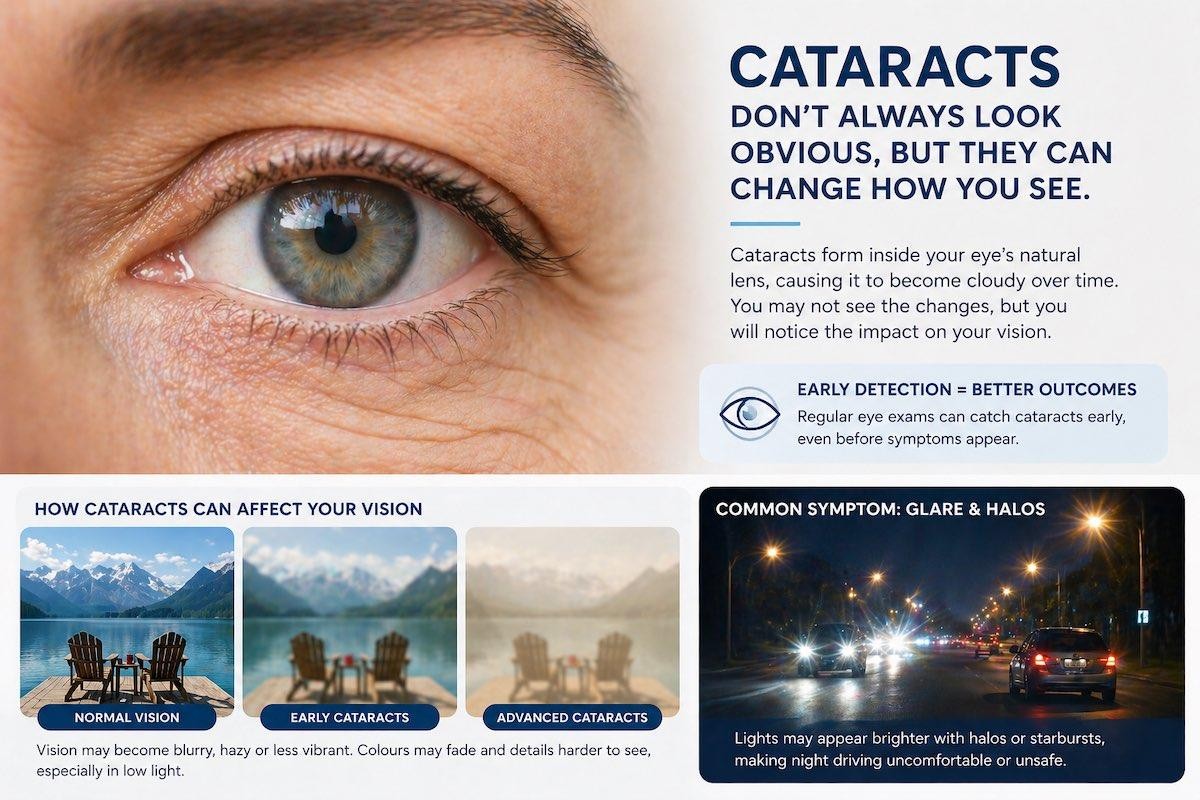
Inside your eye is a natural lens that focuses light so you can see clearly. When a cataract forms, that lens slowly becomes cloudy. As this occurs, light will have trouble passing through cleanly, like a frosted window that gets harder to see through over time.
These changes tend to happen over months or even years, so they can creep up on you gradually. You might start needing more light to read, or find that your glasses don’t seem to help the way they used to. Everyday tasks like driving at night or reading a menu can start to feel trickier than they should.
Common Signs You May Notice
One of the earlier signs of cataracts is how your eyes respond to light:
- Increased Glare/Halos: Headlights, streetlamps, or even indoor lighting may appear to have a halo or starburst effect around them. Bright light that never bothered you before might now feel uncomfortable or even painful to look at.
- Difficulty Night Driving: The glare from oncoming cars may seem overwhelming, making it harder to judge distances or see clearly between light sources.
- Change in Colour Perception: Shades that once looked vibrant may now appear faded, yellowed, or washed out. A white shirt might look slightly off, or the contrast between colours may seem less sharp than it once did.
- Blurry Vision: You may also notice that faces or text look blurry even when you’re wearing your glasses.
If your prescription doesn’t seem to be working anymore, that’s a clear sign you should talk to your optometrist.
A Simple At-Home Self Check For Cataracts
Trying a few quick tests around the house can help you better understand what is going on with your vision. Just keep in mind that other eye conditions share similar symptoms, so these checks don’t guarantee you have cataracts, but they can certainly put you on the right path toward finding an answer.
The Cover-Each-Eye Test
Find a fixed object across the room, something with clear edges like a clock or a light switch. Cover one eye and focus on that object for a few seconds, then switch and cover the other eye. Pay attention to whether one eye sees more clearly, more blurrily, or differently than the other.
Differences between the two eyes can be an early clue that something has changed. Cataracts don’t always develop at the same rate in both eyes, so this simple test can help you spot an imbalance.
The Reading Light Test
Sit down with a book or your phone under your usual lighting. Notice whether you’re reaching for a brighter lamp or moving closer to a window just to read comfortably. That need for more light than you used to could be an early sign of cataracts.
Also, pay attention to whether the words seem to blur or shift slightly as you read. If you’re squinting more than usual or losing your place on the page, that’s worth telling your optometrist during your next eye exam.
Risk Factors That Raise Your Chances of Cataracts
Age is the most common contributing factor, with many people over 60 starting to notice some degree of lens change. That doesn’t mean cataracts are unavoidable, but it does mean regular eye exams become more important as you get older.
Several other factors can raise your risk at any age. These include:
- A diabetes diagnosis, as this condition can speed up lens changes
- Long-term UV exposure without protective eyewear
- Certain medications, particularly long-term steroid use
- A family history of cataracts, especially if they developed early
Knowing your risk factors helps you stay proactive. If several of these apply to you, talking to an optometrist sooner rather than later makes sense.
What a Comprehensive Eye Exam Can Confirm
Self-checks are a helpful starting point, but they can’t tell you the full picture. Early-stage cataracts often don’t cause noticeable symptoms yet, and optometrists can only see them clearly with the right equipment. That means you might feel like your vision is fine while changes are already underway.
At-home tests can flag concerns and prompt you to book an appointment, but they aren’t a substitute for a proper exam. Rather, tools like OCT scans can detect early eye changes that would otherwise go unnoticed. Think of them as a reason to pay attention, not a final answer.
What To Expect During an Eye Exam
During a comprehensive eye exam, the doctor uses a tool called a slit lamp to examine the lens of your eye up close. This lets them see clouding or changes that are invisible to the naked eye. It’s a straightforward, comfortable part of the exam.
Routine eye exams cover your full vision health, not just whether you need a new prescription. If an optometrist finds cataracts early, there are more options available to help manage your vision going forward, including cataract surgery co-management when the time is right.
Take Control of Your Eye Health
If any of these signs feel familiar, it’s probably time to book your next eye exam! Taking care of your eyes helps you stay ahead of changes so you can have all the information you need.
The team at Discover Eyecare is here to support your vision at every stage of life, from a quick concern to a full eye health review. Reach out to us in Abbotsford or Chilliwack to schedule your appointment today and keep your eyes seeing their best!