


If you’ve been diagnosed with keratoconus or suspect you might have it, you might feel worried about your vision. The cone-shaped bulge that keratoconus causes on your cornea can make everyday tasks like reading or driving feel increasingly difficult.
Keratoconus rarely causes complete blindness, but it can lead to significant vision problems if left untreated. The good news is that modern treatments can help slow the condition’s progression and protect your sight. Proper care from professionals like our team at Discover Eyecare is a crucial part of eye disease diagnosis and management.
What You Need to Know About Keratoconus & Vision Loss
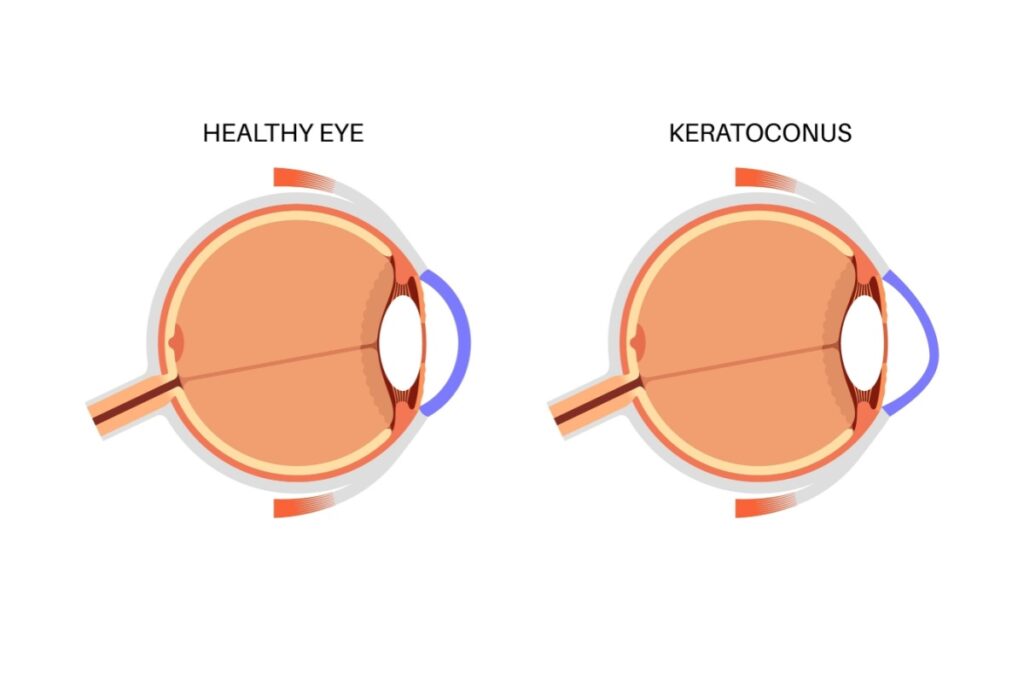
Keratoconus happens when your cornea—the clear front surface of your eye—gradually thins and bulges outward into a cone shape. Normally, your cornea has a smooth, dome-like curve that helps focus light properly onto your retina.
Keratoconus develops slowly over several years or even decades. Changes often start during your teenage years or early twenties, though some people don’t notice symptoms until later in life.
Early detection gives you the most treatment options and helps prevent severe vision loss. Regular eye exams can catch keratoconus before it significantly impacts your daily activities.
How Keratoconus Affects Your Vision
Your cornea acts like a camera lens, bending rays of light so that they focus clearly on your retina. When keratoconus changes your cornea’s once-smooth surface into an irregular cone shape, this causes light to scatter instead of focusing properly.
This scattered light creates the blurry, distorted vision that makes keratoconus so frustrating. You might find that your glasses or contact lenses don’t seem to help as much as they used to.
Common Vision Changes You Might Notice
- Blurred or distorted vision that glasses can’t fully correct
- Increased sensitivity to light and glare
- Frequent prescription changes that don’t improve clarity
- Difficulty with night vision and seeing halos around lights
- Multiple images from one eye (monocular diplopia)
Does Keratoconus Lead to Complete Vision Loss
Complete blindness from keratoconus is extremely rare. Most people with this condition maintain functional vision throughout their lives, especially with proper treatment and monitoring.
The condition typically progresses slowly, giving you and your eye doctor time to implement treatments that can preserve your sight. Even in severe cases, some vision usually remains.
However, without treatment, keratoconus can cause severe vision impairment that affects your ability to drive, work, or perform daily tasks safely. The key lies in getting appropriate care before the condition reaches this stage.
Factors That Influence Vision Outcomes
Your age when symptoms first appear plays a role in how keratoconus develops. People who develop the condition in their teens often experience faster progression than those who get it later in life.
The speed of progression varies significantly between individuals. Some people have stable keratoconus for years, while others notice changes more quickly.
Access to proper treatment options makes a significant difference in your long-term vision outcomes. Modern treatments can slow or stop progression when started early enough.
Treatment Options to Protect Your Sight
Early-Stage Management
Specialty contact lenses designed for keratoconus can dramatically improve your vision quality. These rigid gas permeable lenses create a smooth surface over your cornea, allowing light to focus properly.
Eyeglasses might help in the condition’s early stages, but they become less effective as the condition progresses and your cornea becomes more irregular.
Treatment Methods for Progression
Corneal collagen cross-linking strengthens your cornea by creating new bonds between collagen fibers. This can slow or stop keratoconus progression, particularly when performed in the early to moderate stages.
Surgical options like corneal implants can reshape your cornea and improve vision in more progressed cases. These procedures help flatten the cone-shaped bulge.
Corneal transplant surgery becomes an option when other treatments can’t provide adequate vision correction. Modern transplant techniques have high success rates for restoring functional vision.
When to See an Optometrist in Abbotsford or Chilliwack
Warning Signs That Need Attention
- Sudden changes in vision quality or clarity
- Increasing difficulty with daily tasks like reading or driving
- Eye pain, discomfort, or unusual sensations
- Worsening light sensitivity that interferes with activities
Comprehensive eye exams can detect keratoconus in its early stages. Corneal topography creates detailed maps of your cornea’s shape and can reveal early changes, while regular monitoring helps track any progression and allows your optometrist to adjust your treatment plan accordingly. If you’re experiencing vision changes or have concerns about keratoconus, our team at Discover Eyecare can provide comprehensive eye exams and targeted care. Contact our Abbotsford or Chilliwack practice locations to schedule an appointment and protect your vision for years to come.